
Touring motorcycle, Motorcycle Touring, Touring bike
Touring Bike Fuel Consumption: Real Costs & Mileage in Singapore
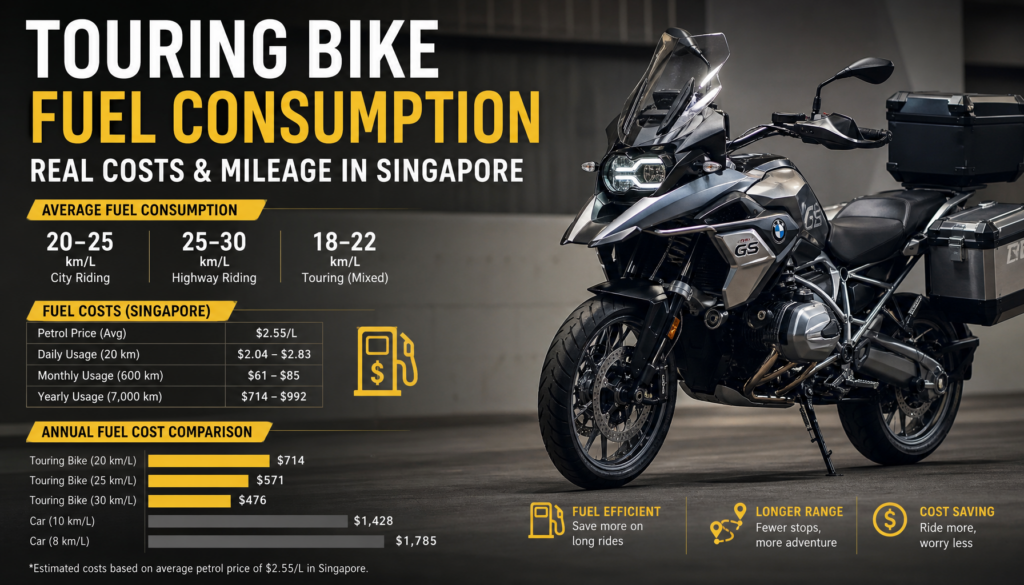
Jun
Touring Bike Fuel Consumption: Traffic jams and rising petrol prices can make owning a motorcycle in Singapore stressful. Many riders look for better ways to stretch every dollar spent at the pump. Touring bike fuel consumption is a hot topic for anyone planning a cross-island adventure or daily commute.
This post dives into what you actually spend on fuel when riding a touring bike in Singapore by 2026. You will learn how fuel-efficiency affects your wallet, get a sense of average mileage, and spot important local trends. We also discuss what factors make some touring bikes more economical than others on Singapore’s crowded roads. Whether you’re upgrading your ride or calculating your monthly budget, you’ll get practical insights to help with decision-making. Let’s break down real fuel costs so you can ride smarter in the years ahead.
Touring Bike Fuel Consumption in Singapore: What Every Rider Needs to Know
Touring Bike Fuel Consumption: For Singapore riders in 2026, touring bike fuel consumption is more important than ever — especially with rising fuel costs and increasing demand for efficient journeys. Before investing in a touring motorcycle, it’s crucial to understand how different factors shape your real-world fuel usage, and how that directly affects your wallet and riding experience.
Modern touring bikes cater to a wide range of riders, with options spanning small, mid, and large-engined machines. Engine size and type play a major role in fuel efficiency: twin-cylinder bikes often offer better mileage than triple or four-cylinder models, but the right choice depends on your balance between performance and economy. Additionally, bike weight and aerodynamics can either help save petrol on the expressway, or cause your fuel bill to climb if your machine is heavy or less streamlined.
Touring Bike Fuel Consumption: The diversity of Singapore rides — from smooth expressway cruising along the PIE to weaving through inner-city traffic — has a direct impact on touring bike fuel consumption. Stop-start city journeys burn more petrol than steady highway runs, while off-road adventures or riding with a passenger and fully loaded panniers can reduce your kilometres per litre. Riders should carefully factor these local conditions into their bike and route choices.
Fuel tank size matters too: models with larger tanks give you more range per fill-up, reducing the number of fuel stops needed on long Malaysia road trips, and offering peace of mind on extended rides along less populated routes. Local touring fans who plan epic journeys up the North-South Highway can benefit from a bigger tank and lower average consumption — making your travel not just enjoyable, but efficient and cost-effective.
Finally, don’t forget that riding style makes a major difference. Smooth throttle control and steady cruising speeds help to extend your distance per tank, leading to lower monthly fuel bills — a big plus for Singaporeans who tour frequently or have to factor in the rising costs of ownership and travel budgeting. Making informed choices about your touring bike and riding approach lets you maximise adventure while keeping expenses under control.
Quick Specs: Touring Bike Engine Types and Fuel Efficiency at a Glance
| Bike Category | Engine Type | Standard Fuel Economy (L/100km) | Estimated Real-World Consumption (L/100km) | Fuel Tank Capacity (L) | Notes on Weight & Aerodynamics |
|---|---|---|---|---|---|
| Small Displacement | Twin-cylinder | 3.5 – 4.0 | 4.0 – 4.5 | 15 – 18 | Lightweight; good city fuel efficiency; more wind resistance on highways |
| Mid Displacement | Triple-cylinder | 4.5 – 5.2 | 5.2 – 6.0 | 18 – 22 | Balanced weight; improved highway aerodynamics; handles passenger/luggage better |
| Large Displacement | Four-cylinder | 5.5 – 6.8 | 6.5 – 8.0 | 20 – 25 | Heaviest; optimal for long-range; best wind protection, higher fuel usage |
Touring Bike Fuel Consumption: When evaluating touring bike fuel consumption in Singapore, engine type and bike category play a key role. Small-displacement twins offer lower running costs for urban commutes, but may require more frequent stops on long rides due to smaller tanks. As you move up to mid and large-displacement models, triple and four-cylinder engines trade higher real-world fuel consumption for greater comfort and stability, especially when fully loaded with pillion and luggage on expressways like PIE or during trips to Malaysia.
Singapore riders, who often balance HDB storage constraints with plans for cross-border touring, will find these differences crucial for budgeting trip costs and frequency of fuel stops. Considering the typical 95-octane pump price in Singapore, even a small improvement in touring bike fuel consumption can translate to noticeable savings over a year of regular leisure or commuting rides. For extended road trips on Malaysia’s highways, larger tanks and efficient engines reduce downtime, making your adventure smoother and more cost-effective.
How Real-World Riding Conditions Shape Your Touring Bike’s Fuel Consumption
Touring Bike Fuel Consumption: Singapore’s unique blend of urban density and scenic touring routes has a significant impact on touring bike fuel consumption. When navigating city traffic, frequent stops, idling, and slow-moving conditions push engines—especially large-displacement or four-cylinder models—to consume more petrol per kilometre. Bikes with smaller engines or lighter frames tend to perform better in these scenarios, but the benefits may be lost if your ride demands frequent acceleration or heavy braking.
On Singapore’s expressways, the tables often turn. Steady highway cruising at optimal speeds can greatly improve mileage per litre, particularly for bikes with efficient aerodynamics and modern twin or triple-cylinder engines. Still, it’s important to note that consistently high speeds or aggressive overtaking can quickly erode those fuel savings. Savvy riders who maintain smooth throttle control and respect recommended cruise speeds will often find their bikes reaching the upper end of manufacturer-stated fuel efficiency ranges during longer rides.
Touring Bike Fuel Consumption: When venturing to popular touring spots—like Malaysia’s highland roads or off-road trails—the equation changes again. Hilly terrain, variable surfaces, and the need for frequent gear changes mean engines work harder, leading to increased fuel use. This effect is even more pronounced if you’re carrying a passenger or touring luggage. The added load requires more energy from the bike, reducing overall touring bike fuel consumption performance; even an efficient medium-size engine will see its mileage drop by several kilometres per litre when fully loaded.
For Singaporean riders planning regional trips or daily commutes, it’s crucial to budget realistically for fuel, factoring in route choice, traffic patterns, and load. Choosing a bike that offers a balance between engine performance and real-world fuel efficiency—not just lab-tested claims—can help you enjoy both city commutes and weekend getaways while keeping running costs in check. Better yet, a little mindfulness over riding style and travel weight can translate to meaningful savings over time.
Touring Range: Fuel Tank Capacity Considerations for Long Singapore Rides
Touring Bike Fuel Consumption: When planning your next adventure around Singapore or even a cross-border trip up north, touring bike fuel consumption goes hand-in-hand with fuel tank capacity. The ability to cover long stretches between petrol stations is a key consideration for local riders, especially given that highway petrol stations are less frequent outside city bounds. Touring motorcycles come in a range of tank sizes, from nimble mid-sized bikes to large-displacement tourers with generous fuel reservoirs. The tank size directly influences how far you can travel on a single fill—crucial for those keen on uninterrupted journeys along the North-South Highway or extended loops through our Causeway and Peninsular Malaysia.
- Smaller touring bikes often prioritise agility and lighter weight, but this generally means smaller fuel tanks. This can limit their maximum range per tank, making them better suited for city commutes or short countryside jaunts.
- Mid-sized models strike a balance, offering improved fuel economy and moderate tank capacities, often delivering a practical blend of city efficiency and decent highway cruising mileage.
- Large-displacement tourers typically feature the biggest tanks for true long-distance travel, allowing for much longer stints between fuel stops. This is especially valuable on Malaysian expressways or remote stretches where petrol stations can be scarce.
It’s also important to note that your effective riding range isn’t just about the litres your tank holds. City riding consumes more fuel per kilometre due to stop-and-go traffic, while steady highway speeds extend your range. Heavy luggage or riding pillion will also reduce how far you can go before needing to fill up again. Proactive trip planning, especially for public holiday weekends or long-haul expeditions, should always include checking the locations of major petrol stations and estimating your fuel needs accordingly.
For Singapore riders, optimising your touring bike fuel consumption with the right tank capacity not only eases the trip but also lets you focus on the scenery rather than the next refuel. Choosing a touring bike that balances comfort, tank size, and fuel efficiency is key, making every ride smooth from Changi Coast to Johor Bahru—and beyond.
Riding Style and Speed: Simple Ways to Optimise Touring Bike Fuel Economy
Touring Bike Fuel Consumption: Your riding style can be one of the biggest factors affecting touring bike fuel consumption, often making a more significant impact than engine size or model. Riders in Singapore should pay close attention to how they accelerate and maintain speed—aggressive throttle use and rapid acceleration tend to burn much more fuel than using smooth, steady inputs. For example, constantly revving up to overtake in city traffic or surging away from traffic lights might provide a thrill, but it increases your average consumption and can add up in monthly petrol costs.
If your goal is to maximise mileage on every tank, it’s smart to stick to optimal cruising speeds. For most touring bikes, moderate speeds deliver better fuel economy compared to sustained high-speed highway riding. The reason is simple: wind resistance and engine revs increase exponentially at higher speeds, demanding more from your bike and wallet. In Singapore, keeping to the speed limits and using the PCN (Park Connector Network) or expressway cruising can help you maintain those ideal efficiency zones.
Touring Bike Fuel Consumption: Consistency is also key. Try to maintain a steady throttle wherever possible, especially when touring long distances or when commuting between HDB estates and popular weekend destinations like Malaysia or the East Coast. Avoid unnecessary downshifting or hard braking, and anticipate traffic lights or slowdowns ahead so you can ease off the throttle gradually. These habits reduce fuel wastage and help you go further on each fill-up—letting you stretch both your touring range and your trip budget.
For Singapore riders planning long journeys or cross-border trips, adopting smoother riding habits isn’t just about saving money. It also means fewer fuel stops, less stress about tank range, and a more relaxed ride—essentials for making the most out of your touring bike experience while keeping fuel consumption low and predictable.
Touring Bike Fuel Costs: Comparing Models and Budgeting for Singapore Riders
Touring Bike Fuel Consumption: When calculating touring bike fuel costs for riding around Singapore in 2026, your choice of bike model, engine type, and riding behaviour directly influence how much you’ll spend at the pump. Small-displacement touring bikes, often equipped with twin-cylinder engines, generally deliver higher fuel efficiency compared to larger, four-cylinder models. This means less frequent refuelling and lower monthly expenses, an important consideration for riders covering long distances on the PIE or venturing up to Malaysia.
For example, a lightweight touring bike with a smaller engine displacement may consume significantly less fuel in city traffic or when navigating the urban streets of Singapore. On the other hand, long highway cruises—such as along the AYE or North-South Expressway—favour bikes with better aerodynamics and larger fuel tanks, reducing your stops for petrol and improving overall touring efficiency. Keep in mind, however, that carrying extra luggage or riding with a passenger can noticeably increase your fuel usage regardless of engine size.
Touring Bike Fuel Consumption: Planning your riding style is another key factor. Riders who maintain a steady throttle and cruise within optimal speed ranges will see better fuel economy compared to those with aggressive acceleration or frequent high-speed bursts. Over time, this can translate into tangible savings each month, especially for those commuting daily or embarking on weekly Malaysia round-trips.
Monthly touring bike fuel consumption costs depend on how often and how far you ride. For frequent long-distance riders, it’s wise to track your average distance per week and multiply by your bike’s fuel efficiency and Singapore’s 2026 petrol prices. Budgeting in this way helps avoid surprise expenses and ensures you have enough reserved for longer rides, perhaps even allowing you to set aside CDC vouchers for your next overseas trip.
Ultimately, comparing fuel consumption across models and factoring in real-world riding habits allows Singapore touring enthusiasts to budget smarter and select a machine that balances performance, comfort, and running costs.
Touring Bike Fuel Consumption: How Does the Latest Stack Up Against Top Competitors?
Touring Bike Fuel Consumption: When evaluating touring bike fuel consumption in Singapore for 2026, understanding how newer models compare to established favourites can help riders make a smarter purchase. Engine displacement plays a significant role: small and mid-size touring bikes often deliver superior fuel efficiency compared to large-displacement machines, especially in city traffic. Twin-cylinder engines typically sip less fuel than triples or fours, making them an attractive option for urban commutes as well as long-distance rides. However, riders who prioritise highway cruising comfort and performance may still gravitate towards larger, four-cylinder models despite their slightly higher fuel consumption.
Real-world conditions in Singapore further highlight these differences. On highways like the PIE or AYE, lightweight and aerodynamic bikes benefit from steady cruising speeds, yielding better mileage per litre compared to heavy touring motorcycles with bulky luggage racks and loaded panniers. City riders, on the other hand, should be aware that frequent stops and starts, as well as the additional mass of a passenger or cargo, can negatively impact fuel economy, sometimes significantly. Those tackling mountain routes or off-road trails will notice the extra strain on engines—expect increased fuel usage in these adventurous scenarios.
Touring Bike Fuel Consumption: Touring range is another crucial consideration. Models with larger fuel tanks obviously offer longer distances between stops, reducing the need for frequent refuelling—an advantage when exploring Malaysia or planning rides to remote areas. This convenience, however, may come with trade-offs in added bike weight and higher upfront costs. Riders should weigh these factors against their personal needs and average journey lengths.
For those conscious about monthly fuel expenses or trip budgeting, comparing actual fuel usage across popular touring bikes is vital. Aggressive throttle use and high speeds, especially on Singapore expressways, will inevitably increase consumption. Opting for smoother acceleration and maintaining optimal cruising speeds not only prolongs the bike’s range but also saves on fuel costs over time. Ultimately, making an informed decision about touring bike fuel consumption sets the stage for cost-effective and enjoyable riding across Singapore and beyond.
Singapore Buyer Concerns: Petrol Availability and Cost on Local & Cross-Border Tours
Touring Bike Fuel Consumption: For Singapore motorcyclists passionate about long-distance trips, touring bike fuel consumption isn’t the only concern — petrol availability and fluctuating cross-border costs also play a crucial role. Fortunately, the main expressways from Singapore into Malaysia, including the North-South Highway, are well-served by petrol stations, so running dry is rarely an issue. However, planning is needed for remote areas or when venturing deeper into Thailand, where stations can be further apart, especially outside urban centres. Riders should always check their touring bike’s effective range per tank, considering variables like engine size and trip speed, to ensure they comfortably make it between refuelling points.
Petrol prices also differ significantly across borders. Fuel in Malaysia is generally cheaper than in Singapore, but Singapore-plated motorcycles are required to use RON 97 or higher, which comes at a slight premium compared to local pump prices. For those frequently touring across ASEAN, especially for rides extending into Thailand, it’s good practice to monitor local rates and factor in occasional currency fluctuations. The difference in price can make monthly fuel budgets for riders who embark on frequent adventures vary considerably, so it’s wise to estimate your expected fuel expenses per trip before setting off.
Another real-world consideration is the frequency of fuel stops. Bikes with larger tanks or superior fuel efficiency — thanks to mid-size engines or efficient riding styles — let you stretch those intervals and enjoy longer, uninterrupted stints on the open road. As a result, choosing a touring bike with excellent touring bike fuel consumption and adequate tank capacity not only brings peace of mind for cross-border journeys but also reduces total trip cost and hassle, ensuring you spend less time searching for the next fuel stop and more time enjoying the ride around Malaysia and beyond.
Frequently Asked Questions
What is the best engine size for daily Singapore use and touring into Malaysia?
The best engine size depends on your intended mix of city commuting and longer tours. Smaller engines (250-400cc) are fuel efficient and nimble for Singapore’s daily traffic, but may feel strained on long highway stretches. Mid-sized bikes (500-750cc) typically balance fuel economy with comfort and power, making them ideal for local errands and cross-border rides to Malaysia. Assess your primary use to optimise touring bike fuel consumption.
How do pillion riders or heavy luggage impact real-world mileage?
Carrying a pillion passenger or heavy touring luggage will typically reduce your touring bike’s fuel efficiency. The added weight increases engine workload, which, combined with greater wind resistance, usually leads to noticeable drops in mileage—especially on stop-start city rides or hilly terrains. If maximising fuel savings is a priority, try to pack lightly and distribute weight evenly.
How often will I need to refuel on a typical Malaysia tour?
The number of refuelling stops depends on your bike’s tank capacity and average mileage per litre. Mid-sized touring bikes usually cover 250–350km per tank under steady highway cruising. For popular North-South Highway routes, this often means refuelling every 3–4 hours of riding. It’s smart to plan stops at major petrol stations along your route to avoid running low in more rural stretches.
What are Singapore’s regulations on carrying or storing spare petrol?
Under LTA and SCDF rules, Singapore restricts the transport and home storage of petrol for safety reasons. Motorcyclists are generally discouraged from carrying extra fuel containers, and any spare petrol should be stored only in approved, tightly sealed containers—never inside HDB flats or lifts due to fire risks. Always check the latest regulations before your trip.
Do different fuel brands impact bike performance or mileage?
Most touring bikes run smoothly on standard unleaded petrol sold at all major brands in Singapore and Malaysia. Differences in performance or fuel consumption between brands are usually minimal for stock engines and regular touring. Stick to reputable stations to ensure fuel quality, and you’ll consistently achieve the best possible mileage on your rides.
Should You Choose a Touring Bike for Fuel Economy? Our Verdict for Singapore Riders
Touring Bike Fuel Consumption: When weighing up whether a touring bike is the right choice for fuel economy in Singapore, it is key to consider both your typical riding routes and the real-world costs involved. From the data, it’s evident that engine size and configuration play significant roles: smaller-displacement bikes and twin-cylinder engines usually deliver the best fuel efficiency, especially in city traffic. On the other hand, larger bikes with triple or four-cylinder engines may consume more fuel but offer far greater power and comfort for extended trips. For most Singapore riders clocking short daily commutes and occasional weekend jaunts, mid-sized touring bikes strike a strong balance between comfort, performance, and manageable monthly fuel expenses.
If your journeys often include long PCN stretches or causeway crossings, the fuel tank capacity and overall touring range become major factors. Bigger tanks allow more kilometres per fill, reducing how often you need to refuel on lengthy rides up Malaysia. These bikes shine for riders who value fewer stops and unfettered long-distance exploration. However, their extra weight and power also mean a higher average spend on fuel per month, particularly for those with a heavy throttle hand or regular pillion passengers and luggage onboard.
Touring Bike Fuel Consumption: Your riding style is another key to maximising fuel savings. Smooth acceleration and steady cruising speeds typical of Singapore’s expressways will yield noticeably better fuel consumption than aggressive, stop-start riding or high-speed dashes. For those primarily using their bike as an urban commuter, prioritising lighter touring models could mean significant savings on monthly petrol costs, ultimately stretching your travel budget further.
Ultimately, the optimal choice depends on your riding needs: mid-sized, twin-cylinder touring bikes suit most Singaporean lifestyles, balancing economy with versatility. Larger displacement models work best for riders planning frequent or lengthy road trips, where range matters most. Before making your decision, review your typical routes, passenger needs, and long-term fuel budget. Our verdict? Carefully evaluate your touring bike fuel consumption needs with real usage in mind—and let data drive your next upgrade.
We at Speedzone specialize in offering top-quality servicing for a variety of premium motorcycle brands. Whether you ride a Yamaha, Honda, KTM, Suzuki, Kawasaki, SYM, Aprilia, Piaggio, or Mutt Motorcycle, you can trust us to keep your ride running smoothly.
Book Your Service Today
Ready to give your motorcycle the care it deserves? Or just curious to know more? With our premium motorcycle accessories available catering to every motorbike models. Book your motorcycle servicing with us or drop by our showroom today and experience the difference of expert servicing tailored to your brand and friendly staffs!
